
The short version
- In Ontario, you’re a first-time buyer if you haven’t owned a home in the past 4 years (or ever)
- Key programs include FHSA, RRSP Home Buyers’ Plan, Land Transfer Tax rebate, and federal tax credit
- You can qualify even if your spouse previously owned a home (with specific program rules)
- Down payments start at 5% of the purchase price, with higher minimums on pricier homes
Buying your first home is exciting. But before you start looking at listings or touring properties, you need to know whether you actually qualify as a first-time home buyer in Ontario. The answer determines which programs and incentives you can access, and some of these can save you thousands of dollars.
Here’s the thing. The definition of “first-time buyer” isn’t always what people think. You might qualify even if you’ve owned property before. And different programs have different rules about what counts.
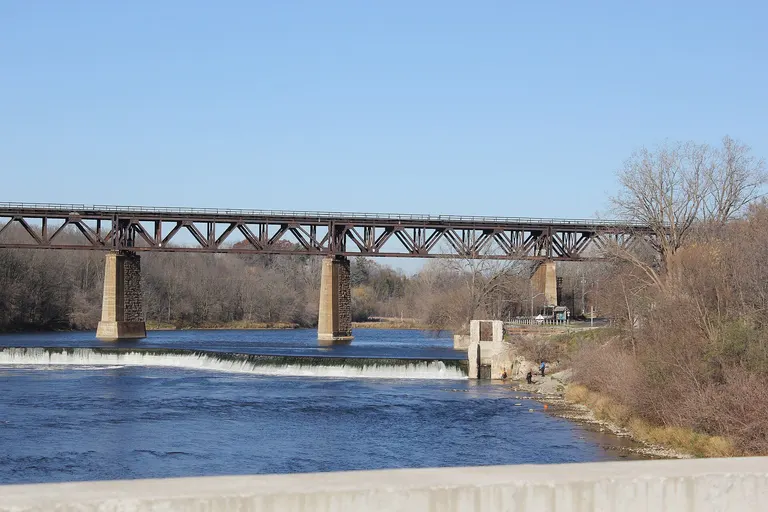
If you’re looking at homes in Brant County (whether in Brantford, Paris, or the surrounding area), understanding these qualification rules is your first step toward homeownership. Let’s break down exactly who qualifies, what programs you can access, and what you need to get started.
Who Officially Qualifies as a First-Time Home Buyer?
The official definition is simpler than you might expect. You’re considered a first-time home buyer if you haven’t owned and lived in a home as your principal residence during the current calendar year or the previous four calendar years.
That’s the four-year rule. It applies to most federal and provincial programs in Ontario.
What counts as “owning” a home? It means you held legal title to a property that you lived in as your main home. If you owned a rental property but never lived in it as your principal residence, you might still qualify as a first-time buyer. If you inherited a cottage but never used it as your main home, same thing.
Now, things get interesting. Both you and your spouse (or common-law partner) need to meet this definition for some programs, but not all. The FHSA looks at your individual ownership history. The Ontario Land Transfer Tax rebate requires that both you and your spouse qualify. We’ll get into the specific rules for each program below.
Once you understand whether you qualify, the next step is figuring out what first-time home buyer incentives in Ontario you can actually use. Our guide on first-time buyer incentives in Ontario breaks down exactly how much each program is worth and how they work together to reduce your upfront costs.
Understanding the First Home Savings Account (FHSA)
What Is the FHSA?
The First Home Savings Account is the newest tool in your first-time buyer toolkit. It combines the best features of an RRSP and a TFSA. You get a tax deduction when you contribute (like an RRSP), and you can withdraw the money tax-free to buy your first home (like a TFSA).
You can contribute up to an annual limit, with a lifetime maximum, and a limited amount of unused room carries forward to the next year. Check the current limits with CRA before you plan your contributions.
The account can stay open for 15 years from when you first open it, or until the end of the year you turn 71, whichever comes first.
Who Qualifies for an FHSA?
To open an FHSA, you need to be a Canadian resident, at least 18 years old, and meet the first-time home buyer definition (you haven’t owned a home you lived in during the current year or the previous four years).
The important part? The FHSA looks at your individual ownership history only. Even if your spouse owned a home during your relationship, you can still open your own FHSA as long as you personally meet the four-year rule.
According to the Canada Revenue Agency’s official FHSA guidelines, both partners in a couple can each open their own FHSA and contribute the full amount to their own accounts. That doubles the savings room for a couple, and all of it can be withdrawn tax-free for a home purchase.
How to Open and Use Your FHSA
You can open an FHSA at most banks, credit unions, or brokerages that offer RRSPs and TFSAs. The money inside can be invested in GICs, mutual funds, stocks, or bonds, just like an RRSP.
When you’re ready to buy, you can withdraw the money tax-free as long as you meet the conditions: you must have a written agreement to buy or build a qualifying home before October 1 of the year following your withdrawal, and you must intend to live in it as your principal residence within one year.
If you don’t end up buying a home, you can transfer the funds to your RRSP or RRIF without triggering taxes. You won’t lose the money, but you will lose the tax-free withdrawal benefit.
RRSP Home Buyers’ Plan Eligibility
The Home Buyers’ Plan lets you withdraw up to a set limit from your RRSP to buy or build a qualifying home. Each spouse can make their own withdrawal, so a couple can use it twice. The withdrawal is tax-free as long as you repay it on schedule. The limit has been raised over the years, so check the current amount with CRA.
To qualify for the HBP, you need to meet the same four-year rule: you can’t have owned a home you lived in during the current year or the previous four calendar years.
Now, about repayments. You repay the withdrawal to your RRSP in equal yearly instalments over a set period, after a grace period. If you don’t make the minimum repayment in any given year, the shortfall gets added to your taxable income for that year. The repayment schedule has been adjusted for some withdrawal years, so confirm yours on your CRA notice of assessment.
The funds you withdraw must have been in your RRSP for at least 90 days before you can use them under the HBP. You also need to have a written agreement to buy or build a qualifying home before October 1 of the year following your withdrawal.
Can you use both the FHSA and the HBP? Yes. You can combine them on the same purchase. The key difference is that FHSA withdrawals never need to be repaid, while HBP withdrawals do.
Ontario Land Transfer Tax Rebate Requirements
Every home buyer in Ontario pays land transfer tax when they purchase property. The tax is calculated on a sliding scale based on the purchase price. Our land transfer tax calculator shows what you’d pay at a given price.
First-time buyers can get a refund of some or all of the provincial tax, up to a set maximum. On lower-priced homes the refund can cover the whole tax. Above that, you pay the difference.
To qualify for the Ontario land transfer tax refund, both you and your spouse (if you’re buying together) must be first-time buyers. You must also be Canadian citizens or permanent residents at the time of purchase, and you must occupy the home as your principal residence within nine months.
Your real estate lawyer typically handles the refund application for you at closing. You don’t need to apply separately. But you do need to make sure you meet all the eligibility requirements, because if you don’t, you’ll be on the hook for the full tax amount.
Federal First-Time Home Buyer Tax Credit
The federal government offers a non-refundable tax credit, the Home Buyers’ Amount, that you claim on your tax return for the year you buy your home. It’s calculated by applying the lowest federal tax rate to a fixed claim amount, so check the current value with CRA. Because it’s non-refundable, it can reduce your federal tax to zero, but it won’t generate a refund.
You can split the claim with your spouse or common-law partner if you’re buying together, but the combined claim can’t exceed the single maximum.
The qualification rules are the same as the other federal programs. You need to meet the four-year rule. But here’s an exception: if you’re eligible for the disability tax credit, you can claim this credit even if you’re not a first-time buyer. The same applies if you’re buying a home for a relative with a disability.
It might not sound like much compared to the other programs, but it’s money that can cover some of your closing costs or moving expenses. Don’t leave it on the table.
Income and Down Payment Requirements
How Much Income Do You Need?
There’s no official minimum income requirement to be a first-time home buyer. But lenders use two key ratios to decide whether you can afford a mortgage: Gross Debt Service (GDS) ratio and Total Debt Service (TDS) ratio.
Your GDS ratio is your housing costs (mortgage principal and interest, property taxes, heating, and half of condo fees if applicable) divided by your gross household income. Each lender sets a maximum for this ratio.
Your TDS ratio includes all your housing costs plus all other debt payments (car loans, credit cards, student loans, etc.) divided by your gross income. Lenders set a maximum for this one too, a little higher than the GDS limit.
You also need to pass the mortgage stress test, which checks that you could still afford your payments at a qualifying rate higher than the rate you actually get. This test makes sure you have some financial cushion.
Our mortgage calculator can help you see how price, down payment, and interest rate change your payment before you talk to a lender.
If you’re self-employed, lenders typically want to see two years of steady income documented through tax returns and financial statements. The approval process is more involved, but it’s absolutely possible to qualify.
Minimum Down Payment Rules in Ontario
Your minimum down payment depends on the purchase price. You need 5% on the first portion of the price, up to a set threshold, and 10% on the portion above it. Above the price cap for insured mortgages, the minimum is 20% of the total price. The federal government sets these thresholds and has changed them over time, so confirm the current limits with your lender.
If you put down less than 20%, you need mortgage default insurance (commonly called CMHC insurance, though there are other providers). The insurance protects the lender if you default on your mortgage. The premium gets added to your mortgage amount, and it’s a percentage of your mortgage that gets smaller as your down payment gets bigger.
Your down payment can come from savings, the sale of another property, or a non-repayable gift from an immediate family member. Many parents help their kids with down payments, and lenders are fine with that as long as it’s documented properly.
What Can You Afford in Brant County?
Brant County offers better affordability than the GTA, which is one reason first-time buyers are looking here. You get more space and more house for your money.
In Brantford, you’ll find a range of options from starter homes to larger family properties. Paris tends to be slightly higher priced because of its charm and small-town appeal. Smaller communities throughout Brant County, as well as Simcoe and Norfolk County, often offer the best value, especially if you don’t mind a bit of a commute.
Property taxes in Brant County are reasonable compared to many other Ontario regions, which helps with overall affordability. When you’re calculating what you can afford, make sure you’re factoring in property taxes, home insurance, utilities, and maintenance costs on top of your mortgage payment.
Can You Qualify as a First-Time Buyer Again?
Yes, you can. The four-year rule means that if you previously owned a home but sold it (or stopped living in it as your principal residence), you can qualify as a first-time buyer again after four full calendar years have passed.
Here’s an example. If you sold your home partway through a year, you’d qualify again for most programs in the fifth calendar year after that sale. The waiting period is based on calendar years, not from the exact date you sold.
Relationship breakups are a common scenario. If you owned a home with a previous partner and you’ve since separated, you can qualify as a first-time buyer once the four-year period has passed. You don’t need to have bought out your ex’s share or anything like that. What matters is whether you’ve personally owned and lived in a home during the qualifying period.
What about inherited property? If you inherit a home but never live in it as your principal residence, it generally doesn’t affect your first-time buyer status. But if you inherit a home and then move into it and live there, that would count as ownership for the purposes of the four-year rule.
Keep in mind that provincial and federal programs can have slightly different rules. The FHSA and HBP use the same four-year definition. The Ontario Land Transfer Tax rebate is different: once you’ve claimed it, you can never claim it again, even if you wait more than four years.
Special Qualification Scenarios
If Your Spouse Previously Owned a Home
This is where things get program-specific. For the FHSA, what matters is your individual ownership history. Even if your spouse owned a home, you can still open and contribute to your own FHSA as long as you personally haven’t owned a home in the qualifying period.
For the HBP, the rules look at whether you lived in a home owned by your spouse during the relevant time period. If your spouse owned a home before you were married or became common-law partners, and you never lived in it together, you still qualify.
For the Ontario Land Transfer Tax rebate, both you and your spouse must individually qualify as first-time buyers. If your spouse has owned a home at any point while you’ve been spouses, neither of you qualifies for the rebate.
The takeaway? Read the fine print for each program. Your eligibility might differ depending on which benefit you’re applying for.
If You’ve Only Owned Property Outside Canada
Good news. Most Canadian first-time buyer programs only look at whether you’ve owned property in Canada. If you owned a home in another country but never owned property in Canada, you generally still qualify as a Canadian first-time buyer.
You’ll need to provide documentation to prove your ownership history (or lack thereof) in Canada. Your lender and lawyer will guide you through what’s needed.
If You’ve Owned Commercial or Investment Property
The key word in the first-time buyer definition is “principal residence.” If you’ve owned rental properties or commercial real estate but never lived in any of them as your main home, you can still qualify as a first-time buyer for a residential purchase.
This scenario comes up more often than you’d think. Someone might own a rental property or cottage but has never actually owned their own primary residence. As long as you meet the four-year rule for principal residence ownership, you should qualify.
Next Steps After Confirming You Qualify
Now that you know you qualify, here’s what to do next.
First, start saving and open the right accounts. If you’re eligible for an FHSA, open one as soon as possible. The sooner you open it, the sooner you start accumulating contribution room. Even if you can’t max it out right away, getting it started matters. If you have RRSP savings you can use, make sure they’ve been in your account for at least 90 days before you’ll need them.
Second, get pre-approved for a mortgage. Pre-approval tells you exactly how much you can borrow and shows sellers you’re a serious buyer. Our complete mortgage pre-approval guide walks through exactly what lenders look for, what documents you’ll need, and how to prepare.
Third, understand your total costs. Your down payment is just the start. You’ll also need money for closing costs (typically 1.5% to 4% of the purchase price), moving expenses, and an emergency fund for unexpected repairs or maintenance.
Fourth, start exploring neighbourhoods. Drive through areas you’re interested in at different times of day. Check out local amenities. Think about your commute. Visit open houses even if you’re not ready to buy yet. You’ll get a better sense of what’s available in your price range and what matters most to you.
The Brant County market offers a lot of options for first-time buyers. Whether you’re looking at Brantford’s established neighbourhoods, Paris’s small-town charm, or the more affordable communities throughout the county, there’s likely something that fits your needs and budget.
Ready to Take the Next Step?
Now that you know you qualify as a first-time home buyer in Ontario, it’s time to start your search. Whether you’re looking in Brantford, Paris, or anywhere across Brant County, finding the right home starts with understanding your local market.
Our team helps first-time buyers across Brant County every week. We know the neighbourhoods, we understand the programs, and we’ll make sure you’re making the most of every incentive available to you. Let’s talk about what you’re looking for and how we can help you find it.